
Futuristic DevOps illustration featuring two small robots and mechanical arms assembling a glowing purple infinity symbol on a dark neon background.

DevOps Lifecycle, Benefits and Implementation Guide

Date Posted:

Category:

Technology

Author:

Parthasarathi

Futuristic DevOps illustration featuring two small robots and mechanical arms assembling a glowing purple infinity symbol on a dark neon background.

DevOps Lifecycle, Benefits and Implementation Guide

Date Posted:

Category:

Technology

Author:

Parthasarathi

Futuristic DevOps illustration featuring two small robots and mechanical arms assembling a glowing purple infinity symbol on a dark neon background.

DevOps Lifecycle, Benefits and Implementation Guide

Date Posted:

Category:

Technology

Author:

Parthasarathi

DevOps – Development Operation

Introduction Of DevOps

DevOps is a modern software development approach that connects the Development (Dev) and Operations (Ops) teams to build, test, and maintain software.

To enable coordination and collaboration between formerly separate roles like Development, IT Operations, QA, and Security.

In the Development and Operational process, people work separately. In the DevOps culture, the team has to work as a team with a set of shared tools. This culture builds confidence in the application they build, responds better to customer needs, achieve goals faster. Helps to provide value to customers by producing better products.

DevOps and the Application Lifecycle
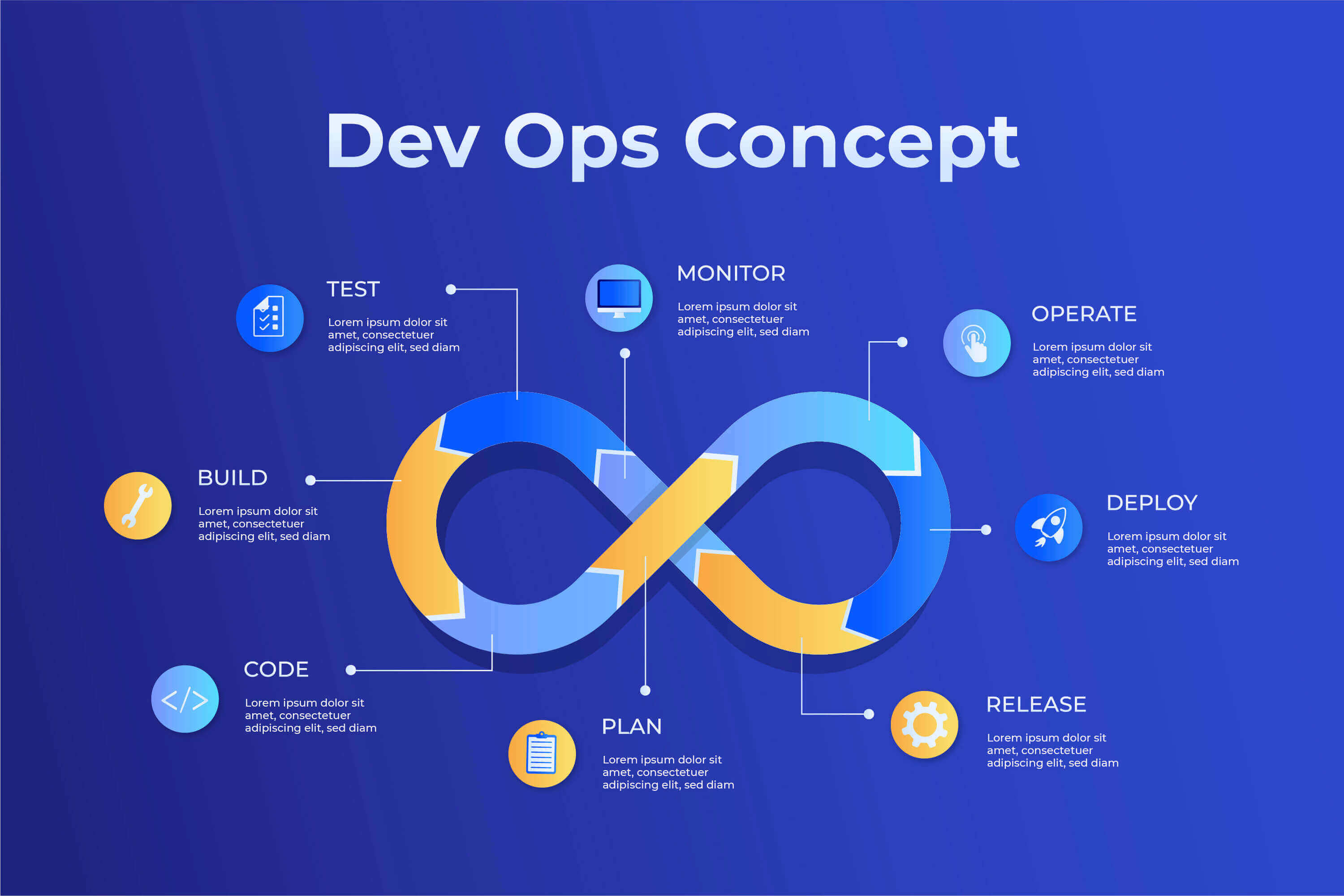
DevOps lifecycle diagram showing continuous stages: Plan, Code, Build, Test, Release, Deploy, Operate, Monitor, with icons and placeholder text.

DevOps has a set of automated workflows called the DevOps Lifecycle. The lifecycle is made to optimize the quick delivery of high-quality software. Includes a series of iterative, Automated workflows that run within a larger iterative development lifecycle.

DevOps Benefits

Rapid Implementation – Companies can shorten the duration required to launch a product. Optimized workflows, team collaboration, Automated Procedures, and efficient delivery methods.

Maintain Market Competitiveness - Flexible Integration, Collaboration, and Satisfying customer needs. They always provide value and strengthen their market standing. In a DevOps setting, teams focus on the customer.

Strengthen Stability and Lower Risk - Upgrading practices enables teams to build dependable systems, reduce failures, and maintain uniform service quality.

Enhance the average time to recovery - To address software failures, security incidents, and ongoing improvement strategies, the team must assess and strive to improve the metrics.

Deploy DevOps practices

  1. Automate CI/CD

  2. Manage code with version control

  3. Apply Agile software development

  4. Deploy Infrastructure as code

  5. Configuration management

  6. Continuous System monitoring

Integrate AI in DevOps

AI & ML in DevOps is transforming the world of DevOps technology. It can automate tasks and analyze complicated processes. These technologies are DevOps faster, and AI & Automation have increased their production.

Conclusion

DevOps Tools and Applications continue to evolve, helping organizations tackle modern IT and business Challenges. Some of the key technologies and approaches affect the future of DevOps:

  • Platform engineering

  • Observability

  • Low-code/no-code Solutions

Stay tuned to our blog to see more posts about

Sailpoint products implementation and its related updates.

Stay tuned to our blog to see more posts about

Sailpoint products implementation and its related updates.

Category:

Technology

Stay tuned to our blog to see more posts about

Sailpoint products implementation and its related updates.

Stay tuned to our blog to see more posts about

Sailpoint products implementation and its related updates.

Category:

Category:

Technology

Technology

Get your

Tailored Quote for your

Organisation

Get your

Tailored Quote for your

Organisation

DevOps – Development Operation

Introduction Of DevOps

DevOps is a modern software development approach that connects the Development (Dev) and Operations (Ops) teams to build, test, and maintain software.

To enable coordination and collaboration between formerly separate roles like Development, IT Operations, QA, and Security.

In the Development and Operational process, people work separately. In the DevOps culture, the team has to work as a team with a set of shared tools. This culture builds confidence in the application they build, responds better to customer needs, achieve goals faster. Helps to provide value to customers by producing better products.

DevOps and the Application Lifecycle

DevOps lifecycle diagram showing continuous stages: Plan, Code, Build, Test, Release, Deploy, Operate, Monitor, with icons and placeholder text.

DevOps has a set of automated workflows called the DevOps Lifecycle. The lifecycle is made to optimize the quick delivery of high-quality software. Includes a series of iterative, Automated workflows that run within a larger iterative development lifecycle.

DevOps Benefits

Rapid Implementation – Companies can shorten the duration required to launch a product. Optimized workflows, team collaboration, Automated Procedures, and efficient delivery methods.

Maintain Market Competitiveness - Flexible Integration, Collaboration, and Satisfying customer needs. They always provide value and strengthen their market standing. In a DevOps setting, teams focus on the customer.

Strengthen Stability and Lower Risk - Upgrading practices enables teams to build dependable systems, reduce failures, and maintain uniform service quality.

Enhance the average time to recovery - To address software failures, security incidents, and ongoing improvement strategies, the team must assess and strive to improve the metrics.

Deploy DevOps practices

  1. Automate CI/CD

  2. Manage code with version control

  3. Apply Agile software development

  4. Deploy Infrastructure as code

  5. Configuration management

  6. Continuous System monitoring

Integrate AI in DevOps

AI & ML in DevOps is transforming the world of DevOps technology. It can automate tasks and analyze complicated processes. These technologies are DevOps faster, and AI & Automation have increased their production.

Conclusion

DevOps Tools and Applications continue to evolve, helping organizations tackle modern IT and business Challenges. Some of the key technologies and approaches affect the future of DevOps:

  • Platform engineering

  • Observability

  • Low-code/no-code Solutions